
Climate change mitigation in Jordan's wastewater sector
Increasing the use of treated wastewater for agriculture and improving the energy efficiency of wastewater treatment plants strengthen sustainable water management in northern Jordan.
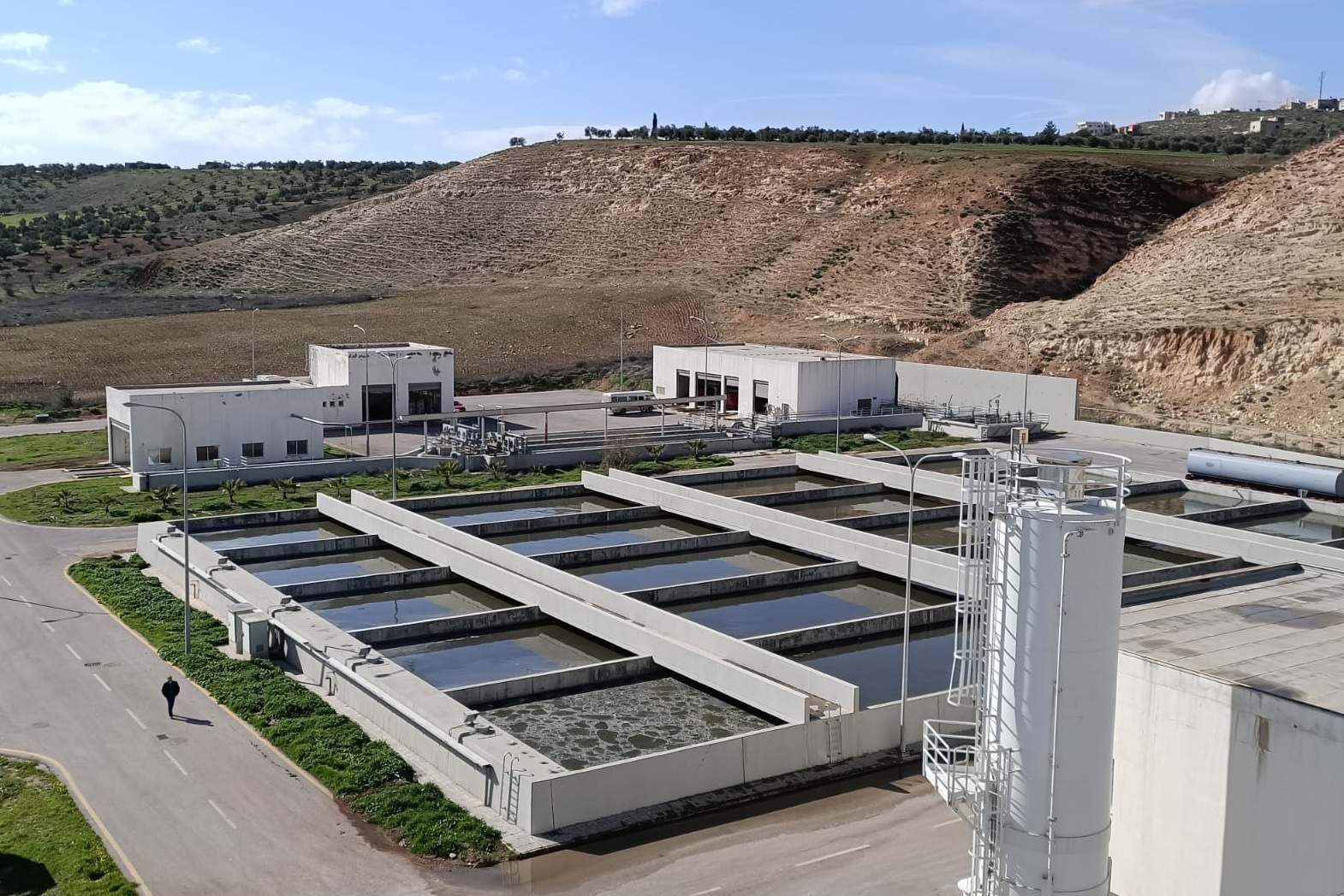
Jordan is one of the most water-scarce countries in the world. The reuse of treated wastewater is therefore of strategic importance for food security. The Wadi Shalalah, Irbid Central and Wadi Arab wastewater treatment plants form an integrated system for wastewater reuse. Its long-term success depends on the plants consistently meeting Jordanian effluent standards while operating economically.
In cooperation with the Water Authority of Jordan (WAJ) and financed by KfW Development Bank, Dorsch Impact is modernizing the three wastewater treatment plants. Sludge treatment, wastewater reuse and sanitation services are being improved, while combined heat and power (CHP) and hydropower increase energy efficiency. Targeted capacity building at the Yarmouk Water Company supports the long-term economic operation of the plants.
Disciplines
- Water
- Wastewater
- Climate Mitigation & Adaptation
- Integrated Energy Systems
Companies
Dorsch Impact GmbH
Client
Water Authority of Jordan (WAJ), Financing: KfW Development Bank
Duration
From 2019 to 2025
Location
Northern Governorate (Irbid region), Jordan
Project Activities
Operations support for the Wadi Shalalah, Irbid Central and Wadi Arab treatment plants, including:
- Detailed design and tendering support for treatment upgrades
- Construction supervision and operational support, including provision of spare parts and equipment
- Optimisation of the biological treatment, digesters and CHP units
- Improvement of UV disinfection and renovation of the chlorination station for emergency disinfection
- Sludge management and disposal planning
- Integration of renewable energy and hydropower generation
- Environmental and social impact assessment
- Training of Yarmouk Water Company staff in sanitation and climate change mitigation
Impact
- Reliable and environmentally sound wastewater treatment for around 500,000 population equivalent (PE)
- Reduced greenhouse gas emissions through biogas and hydropower solutions
- Reuse of reclaimed water for irrigation in the Jordan Valley, supporting agricultural production and the Water-Energy-Food Nexus
Contributing to the UN Sustainable Development Goals
We are committed to making a positive impact and supporting the UN Sustainable Development Goals (SDGs). This project contributes to the following SDGs:
Companies
